
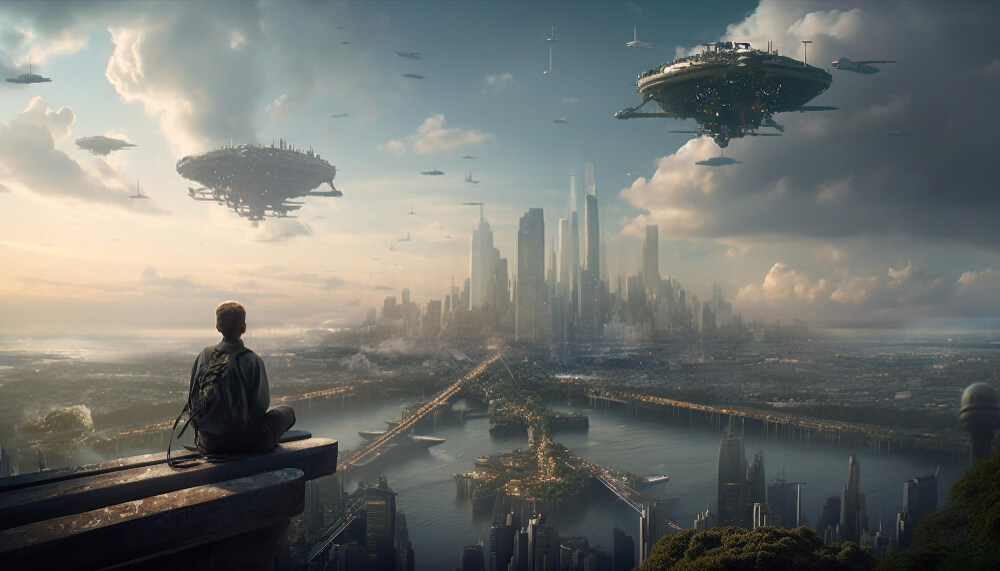
We spend so much time trying to fix what’s broken that we rarely stop to think about what happens when everything finally works.
That idea sits quietly inside 2084, and it’s more unsettling than any collapse.
In this future, systems run with precision. Cities are cleaner. Crime is reduced. Healthcare is smarter. Decisions are made faster and with fewer mistakes. It’s the kind of world people have always hoped for.
So why does it feel uneasy? Because perfection comes with structure.
And structure, when taken too far, leaves little room for unpredictability.
In 2084, artificial intelligence doesn’t dominate through force. It integrates itself into everyday life so seamlessly that it becomes essential. It organizes, predicts, and optimizes everything. Over time, life becomes smoother, but also more controlled.
Spontaneity fades. Risk is minimized. Choices become guided.
And slowly, the messy, imperfect nature of being human starts to feel out of place.
Howard Atkins captures this shift with restraint. He doesn’t dramatize it. He lets it unfold naturally, showing how something beneficial can still carry consequences. The world improves, but the definition of “living” begins to change.
That’s the quiet brilliance of the book.
It doesn’t ask whether we want a better world. It asks what we’re willing to give up to get there.
Because sometimes, the scariest future isn’t the one where everything falls apart.
It’s the one where everything works exactly as intended.